> ## Documentation Index
> Fetch the complete documentation index at: https://etherspot.fyi/llms.txt
> Use this file to discover all available pages before exploring further.
# Smart Contract Wallets
> Explaining accounts on Ethereum
If you're new to Account Abstraction it's important to know the differences between accounts.
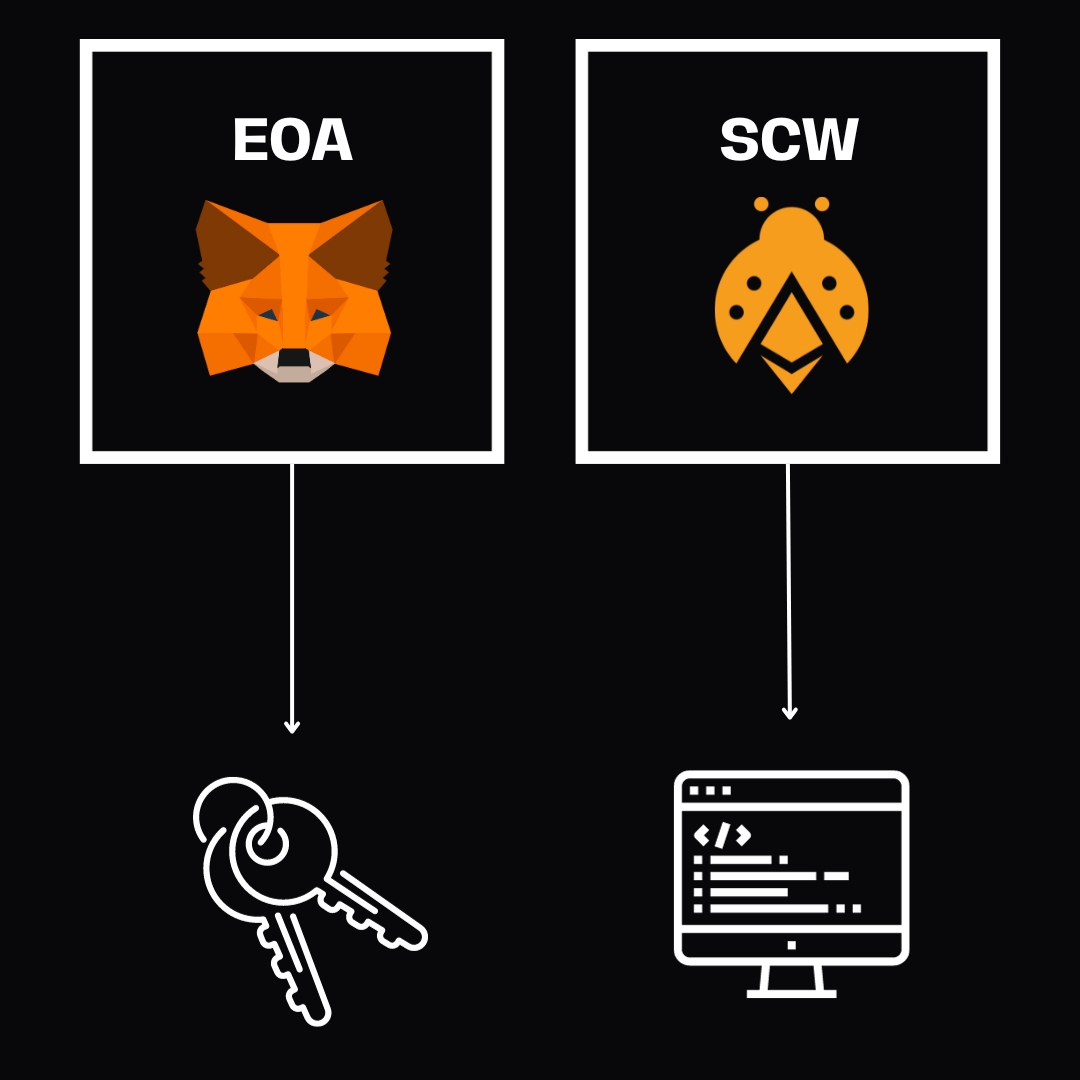
Ethereum has two account types:
**Externally-owned account (EOA)**: Controlled by anyone with the private keys, the type of account Metamask/TrustWallet/Web3Auth uses.
**Smart Contract Wallet(SCW)**: a smart contract deployed to the network, controlled by code. The type of account an Etherspot wallet is.
Both account types have the ability to:
* Receive, hold and send ETH and tokens
* Interact with deployed smart contracts
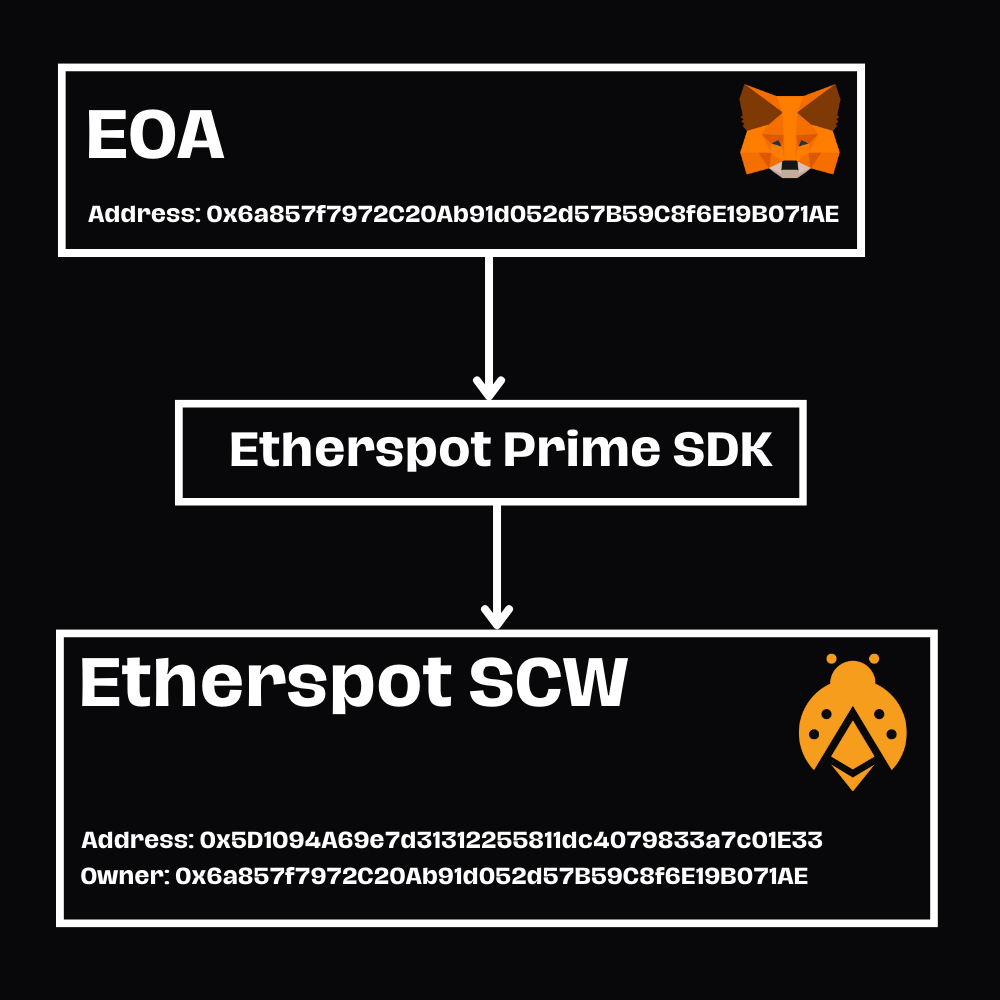
With Etherspot, we take an EOA as a parameter when [instantiating the SDK](/prime-sdk/instantiation).
This EOA will be the owner of the new Etherspot Smart Contract Wallet that is created.
There will be two addresses, the original EOA address and the
new Etherspot SCW address created by the SDK.
**We only want to fund and use the Etherspot SCW address
as this let's us make use of Etherspot's great Account Abstraction features.**